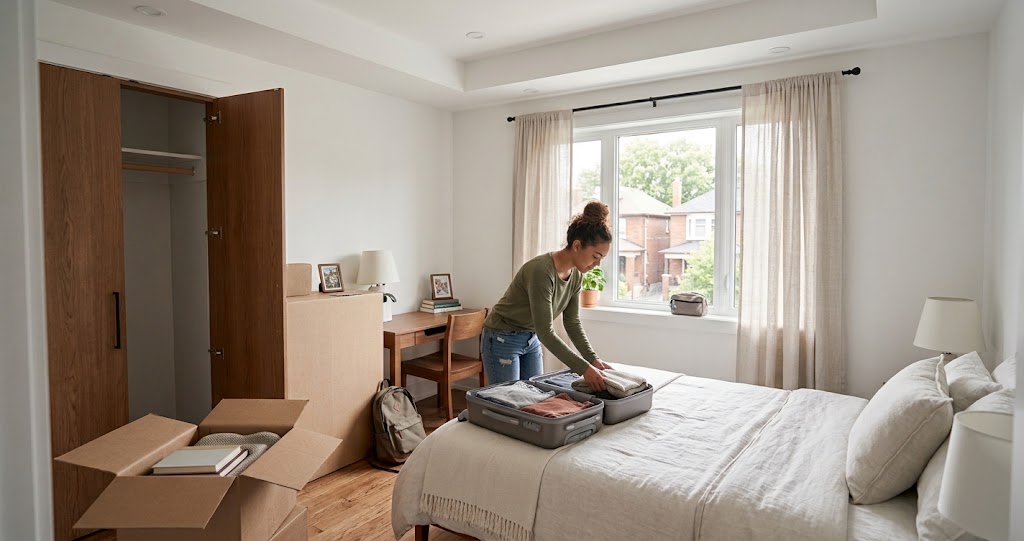
Should you live on campus or find a place of your own? If you’re heading into your first year, that’s one of the biggest housing decisions you’ll have to make. On-campus housing can seem like the obvious choice. Your school is right there, there are other students around, and a lot of the day-to-day stuff is already taken care of. But when you compare on-campus vs. off-campus housing, the decision isn’t always as straightforward as it first seems.
Off-campus housing can give you more freedom, more control over your budget, and more choice about where you live. But you’ll also have more to manage yourself. So before you choose the option that seems easiest, let’s look at what each one actually costs, what you’ll get in return, and what life might look like once you’re settled in.
How Much Does On-Campus vs. Off-Campus Housing Cost?
When you start comparing your housing options, it’s easy to look at the residence fee and assume that’s the full cost. But depending on where you go to school, the price can include more than just your room.
At the University of Toronto, room-only residence fees for 2025 -26 range from $957.62 to $1,477.20 per month, depending on the room type and residence. At York University, eight-month residence packages run roughly $1,140 to $1,662 per month for the room itself.
For comparison, Sparrow’s Toronto homeshare rooms range from $700 to $1,200 per month. And with on-campus housing, you may also have to factor in the cost of a meal plan. Many first-year residence options require one as part of the package.
At UBC, a first-year room and meal plan together can cost roughly $14,000 to $18,100 for the academic year. So if you’re comparing on-campus vs. off-campus housing, don’t assume that living in residence is automatically the cheaper option. Look at the full cost of what you’ll actually be paying, including meals and anything else that comes with your housing.
How much control do you actually have?
One of the biggest differences between on-campus vs. off-campus housing is how much control you have over your everyday life. On campus, things are usually more structured. Your meal plan may be fixed, your roommate is often assigned, and your residence term may run for the full academic year. It’s convenient, but you don’t get to make every decision yourself.
Off campus, you have more flexibility. You can choose what you spend on groceries, have access to a kitchen, and may be able to find a shorter rental term, such as four months instead of a full year. The trade-off is that more of the responsibility falls on you. You’re buying your own groceries, keeping track of bills, and managing your own routine.
What about making friends?
This is one area where on-campus housing can make things easier, especially during your first year. You’re surrounded by other students, orientation events are built in, and there are usually plenty of chances to meet people without having to go looking for them.
Off campus is a little different. You’ll have more independence, but you may need to be more intentional about meeting people and building your social circle. In a homeshare, you might have a host or housemates to connect with, but that’s not quite the same as living on a floor full of students.
So when you’re comparing on-campus vs. off-campus housing, think about what you’ll need most during your first year. More built-in opportunities to meet people, or more independence and control over where and how you live.
Your Housing Needs Can Change
Choosing where to live for your first year doesn’t mean you have to stick with the same option for your entire degree. Plenty of students start on campus and move off campus after their first year once they have a better idea of what they want.
You might find that you enjoy the social side of residence but want more independence later. There’s nothing wrong with changing your mind as your needs change.
When you’re comparing on-campus vs. off-campus housing, the decision isn’t just about which one costs less. It’s also about how much control you want over your schedule and who you live with. And if you decide that off-campus living is the right fit, you don’t have to figure it out alone.
Thinking about moving off campus? Explore our verified rooms with trusted hosts.
FAQ
Not necessarily. The cost depends on the university, room type, meal plan, and what’s included. When comparing on-campus vs. off-campus housing, look at the total cost rather than just the advertised room price. Off-campus options such as homeshare rooms can sometimes cost less, but you’ll also need to consider groceries, utilities, transportation, and other expenses.
Yes. You don’t have to stay on campus for your entire degree. Many students start in residence during first year and move off campus later when they want more independence or flexibility. Your first housing choice doesn’t have to be your permanent one.
Leave a Comment