So you have finally managed to find a room. Maybe it is a house in North York with a host who seems genuinely kind, or a shared condo in Mississauga you found through a friend of a friend. The move-in date is close, and now there is a document in front of you that you are supposed to sign. If you’re reading it and finding it difficult to understand exactly what you’re agreeing to, that’s completely normal. It doesn’t mean you’ve overlooked anything.
Here is the one fact that changes how you should read everything else: a room in someone’s home where they reside and a room in a shared suite or apartment where the owner is not residing are governed by two different sets of rules in Ontario. This guide explains the key differences and what to check before you find a room and commit.
Which Agreement Applies to You
The type of agreement you sign comes down to one question: does the person you are renting from live in the home with you?
| Boarding Agreement | RTA Agreement | |
|---|---|---|
| When it applies | Your host lives in the same home and shares a kitchen or bathroom | Shared suites, condos, and apartments where the landlord is off-site |
| Legal framework | Not covered by Ontario’s Residential Tenancies Act | Full Ontario RTA protections apply |
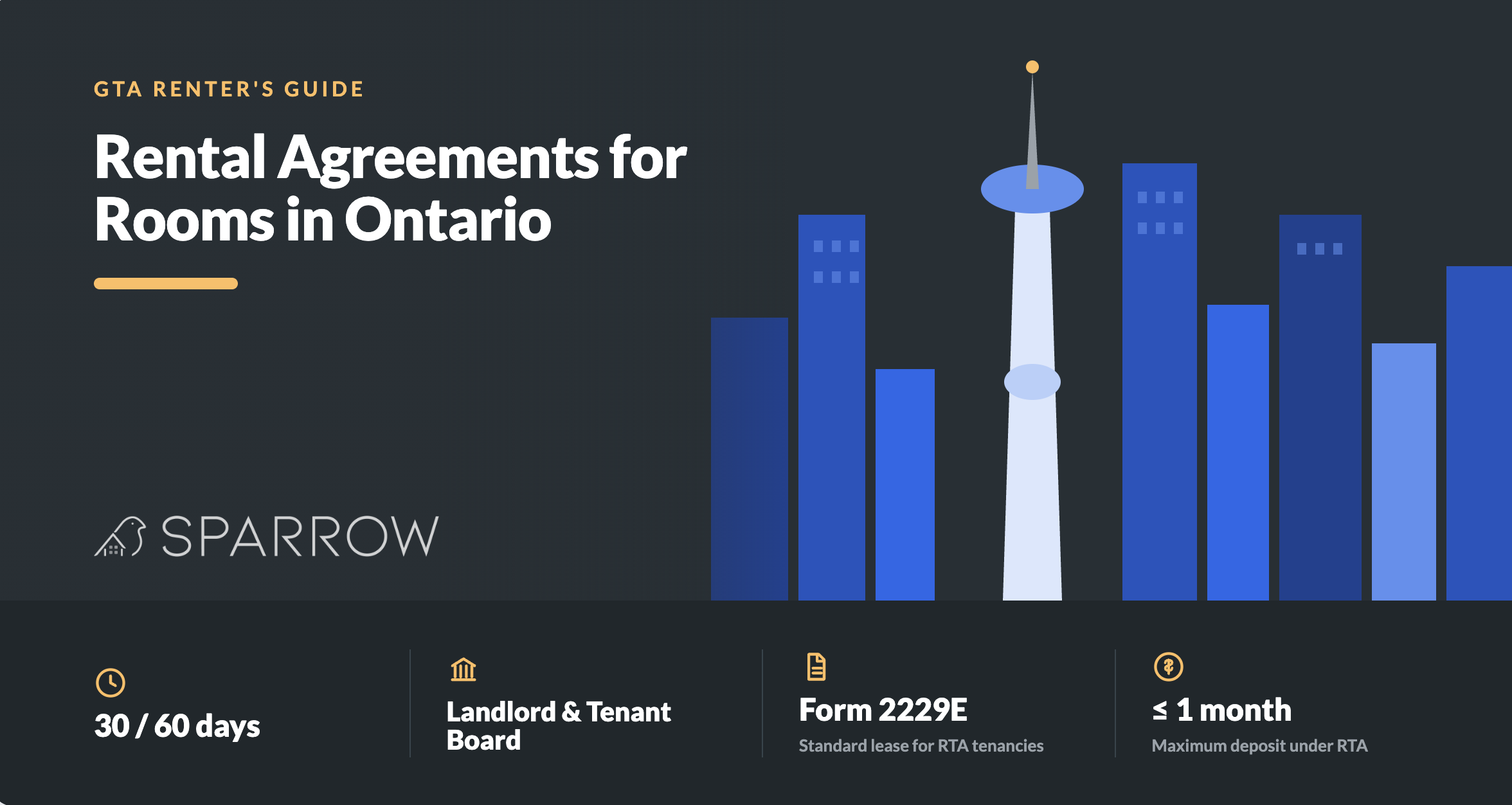
| Your notice to leave | Typically 30 days* | 60 days, aligned to your rental period end date |
| Host or landlord notice to you | Typically 30 days* | 60 days minimum for standard termination |
| Where disputes go | Through Sparrow support first, with monetary disputes able to proceed to Ontario Small Claims Court up to $35,000 | Ontario Landlord and Tenant Board |
- Boarding agreement notice periods are set by the agreement itself. Confirm the exact figures in your specific agreement before signing.
If your host lives in the home too, you are looking at a boarding agreement. It sits outside the Ontario Residential Tenancies Act, which sounds like it should worry you, but in practice it usually means shorter notice periods and more flexibility on both sides, not fewer real protections. If your landlord does not live on-site, the Ontario RTA applies in full, including access to the Landlord and Tenant Board if something goes wrong later.
What Should Actually Be in Your Agreement
Whether you end up with a boarding agreement or an RTA agreement, the following should be mentioned clearly. If any of these are missing or vague, make sure to ask before you sign, not after you move in.
Who is involved. Both the host or landlord and you should be named, with contact information for each side.
What you are renting. The address, the specific room, and exactly which shared spaces come with it: kitchen, bathroom, laundry, and any common areas.
How long, and starting when. The agreement should say whether the tenancy is fixed-term or month-to-month, and it should give a clear start date. Most Ontario RTA tenancies use the standard lease form. Boarding arrangements are typically month-to-month.
Rent and deposit, in plain numbers. The rent, the due date, how you are expected to pay it, and the deposit terms should all be written down, not just discussed verbally. Under the Ontario RTA, a landlord cannot charge more than one month’s rent as a deposit, and that deposit can only be applied as last month’s rent. It cannot be held as a separate damage deposit.
Utilities. Confirm what is included in the rent and what is on you. Shared homes usually bundle utilities in. Suites and apartments vary more, so check.
House rules. This one works differently depending on which agreement you have. In a boarding arrangement, house rules are the norm, and they matter. You are sharing a home with your host, so noise, guests, kitchen use, pets, and general shared-space etiquette should be agreed in writing before you move in, not figured out awkwardly in week one. In an RTA-covered tenancy, a landlord has much less room to set lifestyle rules. A no-smoking clause is common and generally enforceable if it was included at signing. Broader rules about noise or guests are not standard in Ontario RTA agreements and may not hold up.
Notice to end things. The agreement should state what notice each side owes the other, and any conditions for ending early. Under the Ontario RTA, tenants give 60 days’ written notice using Form N9, timed to the end of your rental period.
The Terms That Trip People Up
A few clauses cause more confusion than everything else combined, so it is worth knowing exactly where you stand on each one before it becomes a problem.
Subletting. Boarding arrangements typically do not allow it, so confirm before you sign anything assuming otherwise. Under the Ontario RTA, you have the right to sublet with your landlord’s written consent.
Late fees. A boarding agreement may include a late payment clause. Check for a grace period and the exact amount before you sign. Under the Ontario RTA, late fees are not legal. Any clause trying to charge one in an RTA tenancy simply does not hold.
Entry. Under the RTA, your landlord needs to give at least 24 hours’ written notice before entering, except in an emergency. In a boarding arrangement, your host already lives there and has access to shared areas at all times. That is the nature of living in someone’s home, but they do not have an entry right over your private room.
Repairs. Most agreements ask you not to make alterations without asking first, and to report maintenance issues in writing as soon as they come up. Under the RTA, your landlord is required to keep the unit in good repair.
Insurance. Some agreements require renter’s insurance. If you are renting through Sparrow, SparrowCare already includes coverage, so check whether that applies to you before you go looking for a separate policy.
Before You Sign
Read the whole agreement, not just the parts your host walks you through. If a clause does not make sense, ask about it before you commit, not after.
If you are searching from overseas, this part matters even more. First, verify who you are dealing with before any money moves. You can confirm identity through the platform first, and never send a payment before you have a signed agreement in hand. It is a reasonable thing to insist on, not an awkward one.
If you are still not sure which type of agreement applies to your situation, see how Sparrow’s agreements work before you sign anything. If something in the agreement feels off, especially around notice periods, utilities, or house rules in a boarding arrangement, make sure to ask.
Frequently Asked Questions
What is a boarding agreement in Ontario?
A boarding agreement applies when you share a home with the owner, who lives there too. In Ontario, this kind of arrangement falls outside most of the Residential Tenancies Act, specifically when the owner shares a kitchen or bathroom with you. That means fewer formal statutory protections, but usually more flexibility and a shorter notice period for everyone involved.
What notice period applies in Ontario?
Under a boarding agreement, the notice period is whatever the agreement itself sets, typically 30 days, so confirm the exact figure before signing. Under the Ontario RTA, tenants give 60 days’ written notice, timed to the end of the rental period.
What should I check before signing a room rental agreement in Ontario?
The rent, which utilities are included, notice periods on both sides, deposit terms, house rules if they apply, and what happens if something goes wrong. For local context on what to expect renting a room in the GTA, this guide to rooms for rent in the region covers the market side of it.
Does Sparrow provide the agreement?
Yes. Sparrow prepares the agreement for both homeshare and coliving arrangements, so you are not sourcing your own. It is ready before you move in.

Leave a Comment