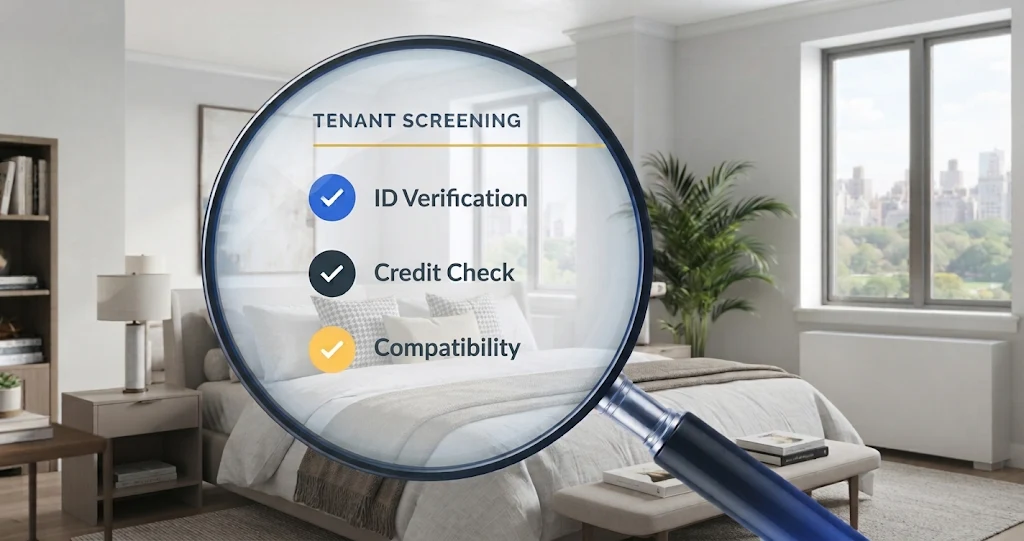
Before someone moves into your property, there’s one important question worth asking. Do you really know who you’re letting in? Whether you’re sharing your own home with a housemate or managing a co-living property with several residents, finding the right person involves more than reviewing a rental application. That’s where tenant screening comes in. From verifying someone’s identity to reviewing their credit history and assessing lifestyle compatibility, each step helps build confidence before anyone moves in.
Step 1: Application and Identity Verification
The process starts when someone submits an application. Whether you’re welcoming a housemate into your home or filling a room in your co-living property, you’ll need some basic information first. This usually includes identification, income or employment details, and references where relevant. But collecting these details is only the beginning.
Identity verification confirms that an applicant is who they claim to be. This involves checking their government-issued ID rather than simply taking their word for it. It’s a key part of the tenant verification process because every other screening step depends on knowing whose information you’re reviewing.
Here’s where the two models differ. In a homeshare arrangement, both the host and the housemate go through identity verification. Since they’re sharing the same home, both sides deserve confidence in who they’ll be living with. In a co-living property, verification focuses on the incoming residents. The property owner manages the investment but doesn’t live alongside them.
This difference matters because the two arrangements involve different living situations. Homeshare brings a host and housemate together to share a home. Co-living brings residents together to share spaces within a managed property.
Step 2: Credit Checks and Consent
Once you’ve confirmed an applicant’s identity, the next step in the tenant screening process is to review their credit history. This is often what comes to mind when landlords think about tenant screening, but it’s only one part of the process.
A tenant credit check looks at someone’s payment history and existing debt obligations. It can help you assess whether they’re likely to meet their rent payments consistently. It’s not a complete picture of someone’s financial situation, but it gives you useful information when reviewing an application.
Both checks require the applicant’s consent, which forms part of the governing agreement. For a co-living management, the agreement outlines how Sparrow handles credit information and privacy. Consent can be withdrawn with 30 days’ written notice, except where disclosure is legally required. At Sparrow, we also follow PIPEDA and applicable provincial privacy laws when handling applicants’ personal information. In a homeshare arrangement, the boarding agreement similarly explains how Sparrow obtains consent to review credit information. It also covers how payment history and conduct during the arrangement can be reported to credit bureaus.
You should not have to guess what happens to your information during tenant screening. Applicants are told what information Sparrow checks and how it may be used before the process begins.
Step 3: Compatibility Matching
A credit check can tell you something about an applicant’s financial history, but it won’t tell you what they’ll be like to live with. That’s where compatibility matching comes in.
Think about your own living preferences. Do you prefer a quiet home? How do you feel about guests, shared chores, or different sleep schedules? These details matter when people share a living space.
In a homeshare, matching helps a host and housemate understand whether their lifestyles are a good fit. In a co-living property, it helps residents share common spaces more comfortably. While no match guarantees a perfect living arrangement, considering these factors as part of tenant screening can help reduce friction and the risk of an early move-out.
Step 4: From Approval to Move-In
Once tenant screening is complete and an applicant is approved, the next step is to put the living arrangement in writing. The type of agreement depends on the property and how it’s managed.
In a homeshare, the host and housemate sign a boarding agreement. For a co-living property, each resident signs a licence to occupy. These agreements outline the terms of the arrangement, including expectations, responsibilities, and other important details.
Before move-in, take time to review the agreement and make sure everyone understands what to expect. A clear agreement helps prevent confusion and gives both sides a better start.
What This Actually Means for You
Good tenant screening goes beyond checking an application. It helps you make a more informed decision before someone moves into your property.
Each step serves a different purpose. Identity verification confirms who you’re dealing with. A tenant credit check gives you insight into an applicant’s financial history. Compatibility matching helps you assess whether their lifestyle fits the living arrangement. Finally, a clear agreement sets expectations for everyone.
Whether you’re welcoming a housemate into your home or managing a co-living property, these steps can help you feel more confident about who moves in. No screening process can guarantee a perfect fit, but taking the time to follow each step can help prevent avoidable issues later.
Ready to Find the Right Tenant for Your Property?
Whether you’re looking to welcome a housemate into your home or have Sparrow manage your co-living property, we’re here to help. From tenant screening and compatibility matching to ongoing support, we make shared living easier to manage.
Book a call to see how you can get started with Sparrow.
FAQs
Tenant screening is the process of reviewing an applicant before they move into a rental property. It can include identity verification, credit checks, and compatibility assessments. These steps help landlords and hosts make informed decisions about who they welcome into their property.
The screening process can vary between landlords and rental arrangements. It may involve verifying an applicant’s identity, reviewing their income or employment details, checking references, and assessing their credit history. At Sparrow, the process includes identity verification, consent-based credit checks, and lifestyle compatibility matching.
It can. A credit check is one part of tenant screening. It gives landlords insight into an applicant’s payment history and existing debt obligations. At Sparrow, applicants provide consent before a credit check takes place.
In a homeshare, a host and housemate share the same home. Tenant screening helps establish confidence before they begin living together. At Sparrow, the process includes identity verification, a credit check with consent, and lifestyle compatibility matching.
In a co-living property, several residents share common spaces within a managed home. Screening focuses on each incoming resident. It includes identity verification, a consent-based credit check, and compatibility matching to help residents share the property more comfortably.
No screening process can guarantee a perfect match. However, identity verification, credit checks, and compatibility assessments can help hosts and landlords make more informed decisions. They also help set clearer expectations before move-in.



Leave a Comment